

Bridge Loan Rates & Fees
Get a Rate Quote Today – North Coast Financial is a California direct lender, not a broker. We can give you a real rate in minutes, not days. Call us at (760) 722-2991 or fill out a quick contact form and we’ll get back to you the same business day. Contact North Coast Financial
Bridge Loan Rates
Bridge loan interest rates are typically higher than traditional 30-year mortgages from conventional lenders such as banks, credit unions and other traditional lenders. Bridge loans are only intended to be very short-term which is why the bridge loan rates are higher. Most conventional lenders do not offer short-term bridge loans as they are primarily focused on providing more long-term products such as 15-year and 30-year mortgages. Residential bridge loans are usually written for 11 months while commercial bridge loans are commonly offered for 12-24 months.
Read more: Our bridge loan FAQ answers the questions borrowers ask most often.
Many bridge loan lenders are private money lenders who provide mortgages secured against real estate. Private lenders are able to fund very quickly and have much more flexibility than institutional lenders. The convenience of speed and flexibility as well as the short-term nature of bridge financing results in bridge loan interest rates that are higher than conventional lending.
Short-Term Bridge Loan Rates Today
Short-term bridge loan rates today are typically in the range of 9.5-10.95%. Mortgage bridge loan rates can vary based on various factors including:
- Loan to value ratio
- Loan amount requested
- Financial strength of borrower
- Credit scores of borrower
- Property location and condition
- Borrower’s exit strategy
- Lender’s current funding capabilities
Free bridge loan calculator
See what these rates mean for your monthly payment
Enter your loan amount, interest rate and term in our bridge loan calculator and get your estimated monthly payment, total interest and payoff amount in seconds.
- Estimated monthly payment
- Total interest cost
- Points and fees
- No contact information required
Residential Bridge Loan Rates
While residential bridge loan rates are higher than conventional rates, they are only a short-term tool used to quickly access equity within an existing property. Residential private money bridge loans are commonly written for 11 months. The bridge loan is paid off once the borrower’s existing property is sold and this typically happens within 3-6 months of the bridge loan being funded. The very short-term nature of the bridge loan is one of the main reasons quick bridge funding interest rates are not as low as conventional rates.
While residential bridge loan rates are higher than conventional rates, the benefit to the borrower of being able to obtain quick financing in order to purchase a new property is worth paying the higher bridge loan financing rates. A residential bridge loan refinance from a private money lender can be funded in 2.5 weeks while a conventional cash-out refinance loan from a bank can take up to 2-3 months.
Real estate bridge loan rates will be much lower than interest rates for unsecured personal loans. Using real estate as collateral reduces risk and results in lower interest rates. Bridge loan rates for California real estate are likely to be lower than elsewhere in the country as there are more private lenders in California which increases competition and reduce interest rates.
Bridge Loan Rates 2026
Bridge loan rates in 2026 have remained similar to interest rates seen in late 2022. While the conventional mortgage rates have continued to increase throughout 2022, current bridge loan rates from private lenders have not increased in the same proportion. Current bridge loan interest rates are expected to remain constant throughout 2026.
California Bridge Loan Request
We will contact you to review the loan scenario and provide a quote.

How Much Does a Bridge Loan Cost?
Bridge Loan Cost Example
The total cost of a bridge loan is the sum of the interest paid over the time the loan is outstanding plus the upfront points and third-party fees charged to set it up.
Unfamiliar hard money terms are defined in our glossary. Because bridge loans are short-term, the interest is usually paid for only a matter of months, but the upfront costs are paid in full regardless of how quickly the loan is repaid.
A simple example shows how the pieces add up. Consider a $500,000 bridge loan held for six months. If the loan carries a 10 percent annual interest rate, the interest works out to roughly $4,167 per month, or about $25,000 over the six months. If the lender charges 2 points to originate the loan, that is another $10,000 paid at closing. Adding a couple thousand dollars in third-party fees brings the all-in cost into the range of $37,000 to $40,000 for that six-month period.
The same loan repaid in three months instead of six would cut the interest portion roughly in half, since interest accrues only while the balance is outstanding. The points and most closing fees, however, stay the same. This is why the length of time you actually hold a bridge loan has a large effect on its total price.
The bridge loan calculator takes a loan amount, a rate and a payoff month and returns the same total, so you can test a three-month hold against a six-month one before committing to either.
Adding Up Interest, Points, and Third-Party Fees
Three categories make up almost the entire cost of a bridge loan. Understanding each one makes it easier to compare offers and estimate your own total.
Interest is the ongoing charge for borrowing the money, expressed as an annual rate but paid monthly. Bridge loan rates are typically higher than conventional mortgage rates because the loans are short-term and often fund quickly on property equity rather than on a lengthy income review. The dollar amount of interest you pay depends on the rate, the loan balance, and how many months the loan is outstanding.
Points are an upfront fee charged by the lender to originate the loan, with one point equal to 1 percent of the loan amount. A loan with 1.5 to 3 points is common in short-term lending. Points are paid at closing and are not refunded if the loan is paid off early, so they represent a fixed cost regardless of the loan term.
Third-party fees are the remaining closing costs that go to parties other than the lender. These can include appraisal or valuation fees, escrow and title charges, recording fees and notary costs. Individually these items are small, but together they can add several thousand dollars to the total. When you ask a lender what a bridge loan will cost, it is worth requesting a written estimate that lists interest, points, and every third-party fee separately, so you can see the full price rather than the headline rate alone.
How to Get the Lowest Bridge Loan Rate
What Qualifies You for a Lower Rate
Bridge loan pricing is driven mostly by risk. The lower the risk a loan presents to the lender, the lower the rate a borrower can generally expect. Several factors move that risk up or down.
Equity in the property is usually the single biggest factor. Bridge loans are secured by real estate, so a lower loan-to-value ratio, meaning you are borrowing a smaller percentage of the property’s value, gives the lender a larger cushion and typically earns a better rate. A borrower requesting 30 percent of a property’s value will often see more favorable pricing than one requesting 70 percent or more.
A clear exit strategy also matters. Because a bridge loan is meant to be repaid quickly, lenders look closely at how the loan will be paid off, whether through the sale of a property, a refinance into longer-term financing or an incoming lump sum. A well-documented, realistic exit lowers the lender’s uncertainty and can support a lower rate. Other factors that can help include the type and condition of the property, the borrower’s experience with similar transactions, and overall market conditions at the time of the loan.
Comparing Bridge Loan Lenders and Offers
Because bridge loan terms vary widely between lenders, comparing more than one offer is the most reliable way to find a competitive rate. The key is to compare the full cost of each offer, not just the advertised interest rate.
Start by putting each offer in the same format. Ask every lender for the interest rate, the number of points and an itemized list of third-party fee. Then calculate the total cost over the length of time you expect to hold the loan. A loan with a higher rate but fewer points can end up being cheaper overall if the loan is repaid quickly. A loan with a low rate but a high amount of points and fees can cost more.
Beyond price, compare the terms that affect flexibility. Look at whether there is a prepayment penalty, since paying off a bridge loan early is common and a penalty can erase the savings from an early repayment. Check the loan term length, any extension options and their cost and how quickly the lender can actually fund. A bridge loan that can’t close fast enough may defeat the purpose of obtaining on to begin with. Weighing rate, upfront cost, and terms together gives a more accurate picture of which offer is genuinely the lowest cost.
Bridge Loan Fees
Bridge loan fees are charged in additional to the bridge loan rate. Bridge loan fees are typically in the form of “points”. 1 point is equal to 1 percent of the loan amount. Points for bridge loans are commonly in the range of 1.5-2.5. Some bridge loan lenders may also add junk fees to the loan in additional to the points. They are often called underwriting, processing or document fees. Other fees associated with a bridge loan would include standard real estate 3rd party fees such as escrow, title insurance, recording fees and notary fees.
Frequently Asked Questions
What is a Bridge Loan?
A bridge loan is short-term financing tool used to help a borrower pull equity from an existing property to help purchase a new property. Once the new property is purchased, the previous property is sold which automatically pays off the bridge loan. For a complete explanation, see what a bridge loan is and how it works.
What determines bridge loan rates in California?
Bridge loan rates are set by a combination of factors such as the loan-to-value ratio (LTV) of the property, the borrower’s strength and credit profile, the property type, and the loan term. Short-term private money loans have a higher interest rate range when compared to long-term traditional financing. As a direct lender, North Coast Financial evaluates each deal individually rather than applying rigid formula pricing. Deals with strong equity positions and clear exit strategies typically qualify for better rates.
How quickly can I lock in a rate?
In most cases, we can give you a tight interest rate range the same day you contact us. Because we are a direct lender and have been funding California bridge loans since 1981, we can provide quick quotes and be ready to move forward with the bridge loan in a matter of days.
What is the minimum loan size for a bridge loan?
North Coast Financial generally funds bridge loans starting at $30,000. We can generally lend up to $3-4 million for a single family residence but there is no specific maximum. Larger loans are evaluated on a case-by-case basis depending on property type and equity position. If you are unsure whether your deal qualifies, call us and we will give you a straight answer.
How long is a typical bridge loan term?
Residential bridge loans from North Coast Financial are short-term loans with terms up to 11 months. Investment/business purpose bridge loans may have longer terms of 12-24 months depending on the project. Bridge loans are designed to fill a financing gap until a property sells or longer-term financing is arranged, so the term is structured around your specific exit strategy.
How do bridge loan rates compare to traditional bank loans?
Bridge loan rates are higher than conventional bank rates because they are short-term, primarily asset-based loans funded without the lengthy underwriting process banks require. The trade-off is speed and flexibility. A bank may take 45 to 60 days and still decline the loan. North Coast Financial can often fund in as few as 5 to 7 days for investments while consumer purpose bridge loans have funding timeline of 2-2.5 weeks due to federal regulations. For investors who need to close quickly or who own properties that do not fit conventional lending criteria, the rate difference is usually justified by the cost of a missed deal.
What are bridge loan rates today?
Bridge loan rates today from North Coast Financial typically run 9.5% to 10.95% on a residential bridge loan, with 1.5 to 2.5 points. Where a specific loan lands in that range depends on the loan to value ratio (LTV), the borrower’s exit strategy and the property. Rates are fixed for the life of the loan, and residential bridge loans are written for up to 11 months. There is no prepayment penalty, so paying the loan off early when the existing property sells costs nothing extra. Call (760) 722-2991 and Don or Jeff Hensel can quote a rate for your scenario the same business day.
What are current bridge loan rates in California?
Current bridge loan rates in California from private money lenders are generally in the 9.5% to 10.95% range. California rates tend to sit lower than in most other states because the state has more private lenders competing for the same loans. Rates from private lenders have stayed fairly steady since late 2022 even as conventional mortgage rates moved, because bridge loan pricing is driven by property equity and short loan terms rather than by the bond market. North Coast Financial has funded California bridge loans for over 45 years and lends only in California, so the rate we quote reflects this market, not a national average.
What are bridge financing rates compared to other short-term options?
Bridge financing rates of roughly 9.5% to 10.95% are higher than a conventional 30-year mortgage but well below unsecured options. A bridge loan is secured by real estate, which is why its rate is far lower than an unsecured personal loan or a business line of credit. It is priced above a bank mortgage because it funds in weeks instead of months, runs for months instead of decades and relies on equity in the property rather than a lengthy income review. For a borrower who needs to buy before selling, the difference in rate over a three to six month hold is usually small next to the cost of losing the purchase.
How much does a bridge loan cost in total?
A bridge loan’s total cost is the interest paid while the loan is outstanding, plus the points and third-party closing costs paid up front. On a $500,000 bridge loan at 10% held for six months, interest runs about $4,167 a month, or roughly $25,000, and 2 points add $10,000 at closing. With escrow, title and recording fees, the all-in figure is in the $37,000 to $40,000 range. Hold the same loan for three months and the interest roughly halves while the points stay the same. The bridge loan calculator lets you run your own loan amount, rate and payoff month.
What is the cost of a bridge loan if I pay it off early?
Paying off a bridge loan early lowers its cost, because interest stops accruing the day the balance is repaid and North Coast Financial charges no prepayment penalty. The points and third-party fees are paid at closing and do not change, so the savings come entirely from the interest side. Most residential bridge loans are repaid within three to six months, once the borrower’s existing home sells. Before signing with any lender, confirm in writing that there is no prepayment penalty and no minimum interest period, since either one can erase the savings from an early payoff.
What fees are charged on a bridge loan?
Bridge loan fees are mainly points, an origination charge of 1 percent of the loan amount per point, and North Coast Financial charges 1.5 to 2.5 points on a residential bridge loan. The other closing costs are standard third-party items: escrow, title insurance, recording and notary. We do not charge an appraisal fee because we do not order an appraisal, and we do not add underwriting, processing or document fees. No junk fees. When comparing lenders, ask each one for a written itemized list, since a lender advertising a lower rate can make it back with several hundred dollars of added fees at closing.
How do I get the best bridge loan rate?
The best bridge loan rate goes to the loan with the least risk: a low loan to value ratio, a clear exit and a property in good condition. Borrowing 40% of a home’s value will generally price better than borrowing 70%, and a signed listing agreement or a documented refinance plan gives the lender confidence the loan will be repaid on schedule. Beyond that, compare offers on total cost, not headline rate: a loan quoted at a slightly higher rate with fewer points is often cheaper over a four-month hold. Working with a direct lender rather than a broker also removes a layer of fees. Our bridge loan FAQ covers what lenders review when pricing a loan.
The information provided herein is for educational purposes only. North Coast Financial is not providing any legal, tax or financial advice.
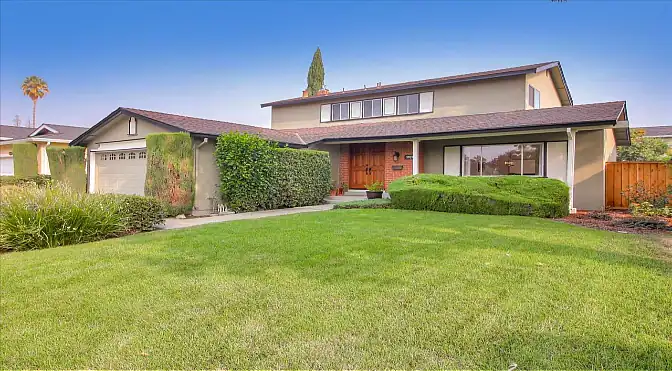
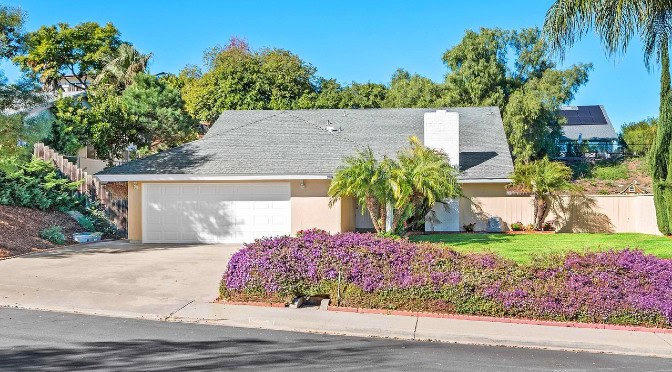
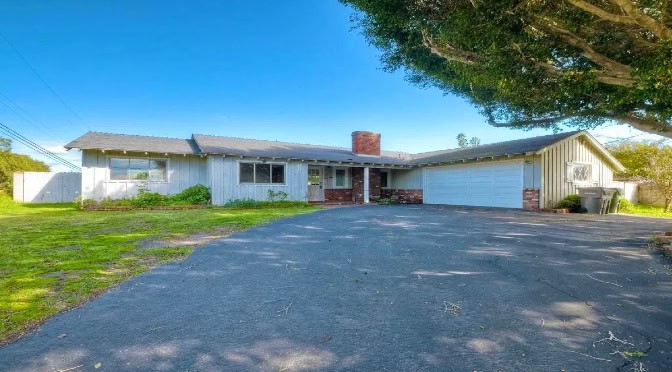
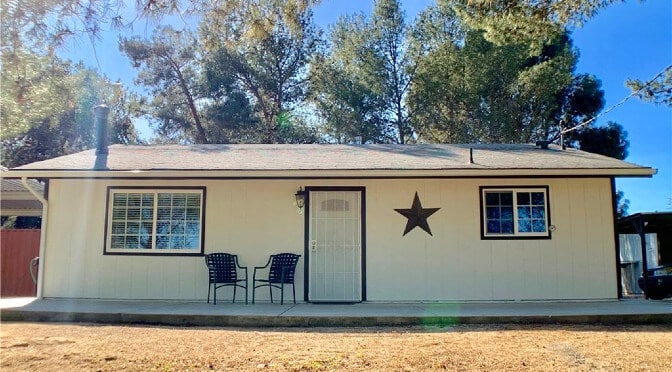
Recent Bridge Loans Funded by North Coast Financial
Bridge Loans Resource Guide