

Home Equity Loan on Inherited Property – Borrowing Against Inherited Property
Borrowing Against Inherited Property
Borrowing against inherited property is commonly done with either a trust loan or probate loan. These types of loans allow for a home equity loan to be obtained on inherited property that is still owned by the estate or trust. A home equity loan on inherited property allows beneficiaries to borrow against the existing equity in the real estate (home value – loans = equity). Beneficiaries commonly need this type of loan to either buy out siblings or raise funds pay for expenses of the trust or estate. Refinancing inherited property is a quick and easy way to handle a short-term need for cash.
Getting a mortgage on an inherited property from a traditional lender isn’t possible at this point as the title of the inherited property is still in the name of the trust or estate. These types of loans are only available from specialized trust and estate loan lenders who can make the loan directly to the trust or estate. Borrowing against inherited property can be completed within 5-7 days in many situations.
California Probate, Estate & Trust Loan Request
We will contact you to review the loan scenario and provide a quote.

Can I get a Home Equity Loan on an Inherited Property?
Yes, you can obtain a home equity loan on an inherited property with a trust loan or probate loan if the property ownership is currently in the name of a trust or estate. The inherited property must have sufficient equity to borrow against. The successor trustee or probate administrator will need to apply and sign for the loan that will be secured by the inherited property as they have the legal authority to act on behalf of the trust or estate. The trust documentation will name the successor trustee(s) who will sign for the irrevocable trust loan. Beneficiaries of an estate will need to file documents with the probate court in order to have a probate administrator named. The probate administrator will need to have full authority as opposed to limited authority in order to have the probate loan funded quickly.
If the property has been transferred out of the trust or estate into an individual’s name (or new living trust), the borrower should be able to obtain a home equity loan (or Home Equity Line of Credit) from a traditional lender.
Renovation Loan on Inherited Property
A renovation loan on inherited property can be an excellent option to quickly borrow funds and fix up the inherited real estate prior to selling. The property may need repairs and upgrades prior to selling the property in order to get the best sales price. Borrowing against the inherited property with a renovation loan provides the estate or trust with fast and flexible funds to quickly repair the property and get it sold for top dollar.
This can be referred to as pre-sale financing for inherited home repairs, and it frequently produces a higher net result than selling the property as-is. A modest renovation budget can lift the sale price beyond the cost of the work if the right improvements are made. The loan would then be paid off when the property is sold. Borrowed funds can be available within 7 days and the loan proceeds are sent directly to the trust or estate bank account.
Inherited a House with No Mortgage / with a Mortgage
Beneficiaries who have inherited a house with no mortgage are in a better position as there is more equity to borrow against and ultimately distribute to each beneficiary. Inheriting a house with a mortgage or home equity loan still allows the beneficiaries to borrow against the inherited property. The existing loans will automatically be paid off with a cash out refinance on the inherited property.
Loans on inherited property of up to 65-70% of the current value of the home are available. An inherited house with no mortgage allows the beneficiaries to cash out up to 65-70% of the value of the property. If the property is worth $1,000,000 they could borrow up to $700,000.
An inherited house worth $1,000,000 with an existing mortgage of $250,000 could still obtain a gross loan amount of $700,000 but the existing loan balance of $250,000 would need to paid off through escrow. This would allow the beneficiaries to receive $450,000.
Inheriting a House With an Existing Home Equity Loan
Inheriting a house with a home equity loan or an existing HELOC works much like inheriting a house with a first mortgage. The debt stays attached to the property until it is refinanced, paid off with cash or sold.
If the trust or estate takes out a new loan against the inherited property, the existing home equity loan or line of credit is paid off (refinanced) through escrow as part of the transaction. If a beneficiary plans to keep the property rather than sell, the short-term loan can later be refinanced into a long-term mortgage once title transfers into the individual’s name.
HELOC on Inherited Property vs. a Lump-Sum Loan
Beneficiaries seek to obtain a HELOC on inherited property. While the real estate is still held in a trust or estate, it is more likely that a lump-sum home equity loan will be available rather than a line of credit. A HELOC is a bank product that requires the borrower to be on title. Beneficiaries of trust or estate are not yet on title as individuals.
The lump-sum equity loan works for most inheritance situations. The funds are often needed all at once to buy out a sibling, pay estate expenses, or renovate the property prior to sale. A single disbursement to the trust or estate bank account is generally needed for these types of scenarios.
Once the inherited property is transferred out of the trust or estate and into an individual’s name, a HELOC from a conventional lender would be available and the short-term loan can be refinanced.
Process for Home Equity Loan on Inherited Property
Obtaining a home equity loan on inherited property is a quick process. Once the initial applications and documents have been received by the lender, approval generally takes 1-2 days. Once the loan request has been approved it will take 5-7 days to process and fund the loan. The loan funds go from escrow directly to the trust or estate bank account. The funds can then be used to buy out siblings who are selling their interest in the inherited property. In other cases, the funds are used to cover expenses of the trust/estate or fix up the inherited property and put it on the market for sale.
In the case of an estate or trust beneficiary buyout, the title of the inherited property can transfer directly into the name of the individual who will be owning the property going forward (important for Prop 58 Loans or Prop 19 Loans). Now the beneficiary can approach a bank or other traditional lender who can provide a long-term mortgage on the inherited property. This new mortgage will automatically refinance the short-term home equity loan on the inherited property.
Inherited Property & Trust Loan FAQ
What happens to a home equity loan or HELOC when the owner dies? Passing away does not extinguish an outstanding mortgage, HELOC, or home equity loan. The debt remains attached to the real estate until it is paid off or refinanced. The estate or trust can obtain new short-term financing against the property that repays the previous loan(s). In some cases, a larger loan amount can pay off the existing balance and provide the trust with cash out for property repairs or making distributions to beneficiaries.
Can a successor trustee take out a home equity loan on trust property? Yes, assuming the trust agreement allows the successor trustee to borrow against trust assets. The designated successor trustee applies for and executes all paperwork for an irrevocable trust loan on behalf of the trust. Individual beneficiaries cannot obtain a loan independently while title remains in the name of the trust name.
Can I get a home equity loan on my parents’ house after inheriting it? Yes. While the property remains under trust or estate ownership, a specialized lender can fund a loan directly to the entity before final distribution. Heirs frequently use this approach to generate liquidity for co-heir buyouts, property repairs or administrative expenses. Once the property title transfers to an individual, the short-term trust loan can be refinanced into a traditional long-term conventional mortgage.
Can one heir borrow against a jointly inherited house? An individual heir cannot unilaterally encumber a shared asset. Instead, the loan must be issued directly to the trust or probate estate, with the successor trustee or personal representative signing on behalf of the entity. Proceeds are then used to buy out siblings who prefer cash.
Can I get a HELOC on inherited property, or only a lump-sum loan? HELOCs are typically not available for properties held in a trust or estate. However, fixed lump-sum equity loans are available from specialized lenders. Standard revolving HELOCs are typically unavailable until the property has been formally distributed out of the entity and into an individual borrower’s name. A conventional lender can provide a HELOC once the property is in an individual’s name.
How soon can I refinance into a conventional mortgage after title transfers? Refinancing can begin immediately after title transfers from the estate or trust to the individual owner. The incoming conventional mortgage pays off the initial short-term loan. This short-term bridge strategy allows heirs to execute fast buyouts and preserve key tax benefits (California Prop 19 Loan).
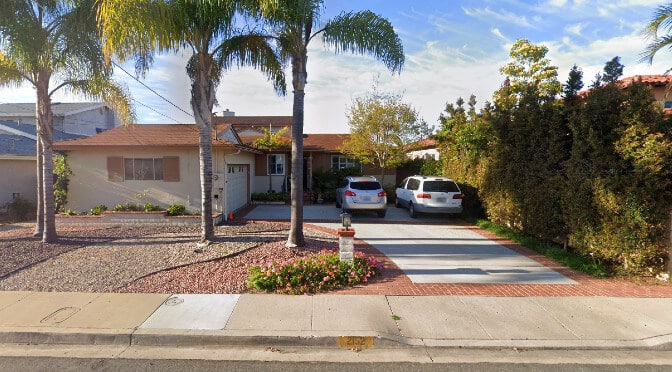
Recent Estate, Probate and Trust Loans Funded by North Coast Financial



Probate & Trust Loans Resource Guide

Jeff can be reached at 760-722-2991 or jeff@northcoastfinancialinc.com