
Your Lender Backed Out of Escrow
Here Is How to Still Close
San Jose Hard Money Loan Request
We will contact you to review the loan scenario and provide a quote.
What to Do If Your Lender Backs Out Before Closing
You had an approval with a close of escrow date. Then your lender told you the loan is not going to be funded. Now the scramble to find a new lender to save the deal begins.
This article details what to do next. Whether a new lender can realistically fund in the days you have left, why your lender withdrew and whether the next lender will care about the same thing, and exactly what to send a replacement lender today.
North Coast Financial has been a direct California hard money lender since 1981. Don Hensel founded the company, and has funded over $1 billion in private money loans in the 45 years since. A meaningful share of those loans replaced a lender that could not perform. If your escrow is closing this week, call 760-722-2991.
Key takeaways
- Whether you can still close comes down mostly to one question: is this an investment property or your own home? A business-purpose loan is exempt from federal Truth in Lending disclosure timing under 12 CFR 1026.3(a)(1), so it can fund in days. A consumer-purpose loan secured by your home cannot (takes 2-2.5 weeks), no matter which lender you call. Section 3 explains why.
- Call your escrow officer before you call a lender. You need the current close of escrow date and whether the seller is willing to extent this date or not.
- Go to a direct lender. A broker has to place your file with someone else, and that adds time and cost to the process.
- Most of the reasons a bank is unable to fund a loan do not apply to private mortgage lenders. Full income documentation, credit events, and a specific lender’s own arbitrary requirements are all bank problems. Title problems are everybody’s problem. Section 4 has the full list.
- Have these ready before you call: the purchase contract with all addenda, the escrow and title contact, the preliminary title report, evidence of value, and entity documents if you are buying in an LLC. Section 5 is the complete list.
1. The first 24 hours
The three calls to make today
Your escrow officer. Ask for the actual date the contract dies, not the date on the original timeline. Ask whether the seller has delivered a Notice to Buyer to Perform. Ask what a signed extension would require. Escrow officers watch deals fall apart every week and they will tell you plainly where you stand.
Your agent. Ask whether there is a backup offer, because that single fact changes how much room you have. Ask what an extension would cost in per diem. Ask about the status of your contingencies, which matters more in California than in most states. Under the standard California residential purchase agreement, contingencies do not expire on their own. The buyer removes them in writing. If you have not signed a contingency removal, your position is very different from what it is if you have.
A direct lender. Not your mortgage broker’s next lender, which is the same chain that just broke. A direct lender funds its own loans, which means the person telling you yes is the person funding the mortgage.
Do not leave the contingency question unanswered
If your financing contingency is still in place, a documented denial from the lender may protect your deposit and may give you the option to cancel rather than scramble. If you have already removed it, the deposit is exposed and speed becomes the only lever you have.
This is a question for your agent, and where real money is at stake, for a real estate attorney. We are a lender, not your counsel, and the answer depends on the exact contract language and on what has been signed. Get it answered today, because it decides whether you are protecting a deal or protecting a deposit.
Four things not to do
Do not apply to three lenders at once hoping one lands. Three half-served files move slower than one complete file, and you will spend the week answering the same questions in triplicate.
Do not let a new lender order a full appraisal if the calendar cannot absorb it. An appraisal is routinely the longest single item in a loan timeline. Ask up front whether the lender orders one. North Coast Financial typically does not order an appraisal for residential property.
Do not sign an extension before you know the per diem. Extensions are normal and sellers often grant them. They are not always free.
Do not go quiet on the seller. A seller who hears nothing assumes the worst and starts talking to the backup offer. A seller who hears a specific plan and a specific date usually waits.
2. Can a new lender actually fund in the days you have left?
This is the only question that matters, so here is the direct answer before the detail.
If this is an investment property with clean title, yes, in most cases. North Coast Financial closes investment property purchases and refinances in 5 to 7 days, and has closed in as few as 3 to 5 days when the file is complete and title is clear. If this property is going to be a personal residence, no, it will take about two weeks (due to federal regulations). Any lender who promises otherwise is either misinformed or telling you what you want to hear.
| Situation | Typical | Fastest realistic | What sets the floor | Most common delay |
|---|---|---|---|---|
| Investment property purchase, clean title | 5 to 7 days | 3 to 5 days | Title clearance and wire timing | A title cloud on the seller's side |
| Fix and flip acquisition | 5 to 7 days | 3 to 5 days | Same as purchase | Entity documents not ready |
| Investment property refinance | 5 to 7 days | 3 to 5 days | Payoff demand from the existing lender | Payoff turnaround time |
| Personal residence, purchase | 2 weeks | 2 weeks | Closing Disclosure must be received 3 business days before signing | Any change re-triggers the disclosure |
| Personal residence, refinance (consumer) | 2.5 weeks | 2.5 weeks | The above, plus a 3 business day rescission period after signing | The rescission period cannot be waived except in narrow circumstances |
| Property held in a trust or in probate | 5 to 7 days | Varies | Trustee authority and how title is vested | Successor trustee documentation |
| Second position behind an existing loan | 5 to 7 days | Varies | Payoff or subordination from the senior lender | How fast the senior lienholder responds |
Why a loan on your own home cannot close as fast, and why that is not the lender’s choice
The difference is not effort. It is federal law, and it is worth understanding because it tells you which promises to trust.
A loan made primarily for a business or commercial purpose is exempt from the Truth in Lending Act under 12 CFR 1026.3(a)(1). An investment property purchase is usually business-purpose. There is no mandated waiting period, so the timeline is set by how fast title clears and money moves.
A loan secured by your own home is usually consumer-purpose and is not exempt. Under 12 CFR 1026.19(f), you must receive the Closing Disclosure at least three business days before you sign. Change certain terms and the three days restart. If you are refinancing your principal residence rather than buying, 12 CFR 1026.23 adds a three business day right of rescission after signing, during which the lender cannot release funds.
Add the disclosure window, the signing, and the rescission period, and roughly two weeks is the floor on an owner occupied refinance. Not because the lender is slow. Because the calendar is not the lender’s to compress.
So when a lender tells you they can fund a loan on your primary residence in four days, you have learned something useful about that lender.
Read more: How long does it take a hard money loan to close?
3. Why your lender fell out, and whether the next one will care
Most reasons a bank withdraws are typical of how banks underwrite. An asset-based lender primarily underwrites the property and the equity so most of those reasons simply do not arise. Some do. Here is the honest breakdown.
| What went wrong | Why the bank stopped | Does it stop an asset-based lender? |
|---|---|---|
| Appraisal came in under contract price | The loan-to-value broke their program ceiling | Sometimes Only if the value genuinely is not there. North Coast Financial typically does not order an appraisal for residential property, which removes the single longest item from the timeline |
| Your income could not be documented the way the program required | Debt-to-income ratios and ability-to-repay documentation | No The underwriting is primarily the property, the equity in it, and the exit strategy |
| A credit event turned up on the final pull | Program credit minimums | Rarely As long as the borrower has a reasonable exit strategy |
| Unpermitted square footage or the property's condition | Investor overlays and habitability standards | Usually no The loan to value may be lowered, and the borrower will need cash on hand to remedy the issues |
| The condo project failed warrantability | Fannie Mae or Freddie Mac eligibility rules on litigation, owner-occupancy ratios, or reserves | Depends It depends on the specific condo project |
| Insurance was unavailable, or FAIR Plan only, in a high fire risk area | The lender's hazard insurance requirements | Depends Hazard insurance of some kind will be required |
| A title cloud, an unreleased lien, a judgment or tax lien | Title cannot be insured clean | Yes Same problem for every lender. The liens or judgments will need to be paid off |
| The lender's own capital or loan program was pulled | Nothing to do with you or the property | No A direct lender funds its own loans |
| The property is held in a trust, an estate, or an entity the underwriter could not clear | The program does not accept that vesting | No We fund loans to trusts, estates, and LLCs regularly |
Two rows on that list are honest problems for us too. A title cloud has to be cleared before anyone records a deed of trust, and no lender can shortcut that. A property that is genuinely worth less than the contract price is a problem for any lender making a loan against it.
Most of the items on the list are a bank constraint, not a property constraint.
Read more: 3 reasons a hard money loan request will be denied
A note on income
It is common for a loan to die because the bank lender could not document income in the way its program required. Self-employed borrowers, business owners, people with a recent change in how they are paid, and investors whose tax returns show depreciation rather than cash flow can run into this issue.
Asset-based lending answers a different question. Instead of asking what your tax returns show, it asks what the property is worth and how much equity stands behind the loan. That is the entire underwriting difference, and it is why a file that stalled for weeks at a bank can move in days here.
Read more: Asset depletion loans and asset-based lending
4. What to send a new lender today
The single biggest factor in how fast a replacement loan closes is how complete the file is on day one. Send all of this at once:
- The property address
- The purchase contract with every addendum and counteroffer
- Escrow and title company contact information, plus the escrow number
- The preliminary title report
- The payoff demand, if this is a refinance
- Insurance binder, or your insurance agent’s contact
- Entity documents if you are buying in an LLC: articles of organization, operating agreement, and EIN
- Evidence of value: recent comparable sales, a broker price opinion, or the appraisal that came in low. Send it even if it killed the last deal, because it is still information
- The denial or withdrawal letter from the prior lender, if you have one
Can a lender give you a preapproval letter today?
Often yes, and sometimes that is the thing that actually saves the deal. A seller who is about to cancel usually wants evidence that you are not just hoping. A preapproval letter from a direct lender who has reviewed the file is a different document from a preapproval from a broker who has not. Ask for it in your first call.
Read more: What documents are necessary for a hard money loan?
5. When the deadline is not the seller’s to move
Sometimes an extension solves the problem. Sometimes there is nobody to ask.
A 1031 exchange under the 45 and 180 day clocks
In a 1031 exchange you have 45 days from the sale of the relinquished property to identify replacement property, and 180 days to close. Those windows are set by the Internal Revenue Code. They are not negotiable, no seller can extend them, and missing them does not cost you a house. It costs you the tax deferral on the entire gain.
That changes the math completely. A financing failure at day 150 of an exchange is not a scheduling inconvenience, it is a tax event. Conventional underwriting cannot reliably be restarted inside the remaining window, which is why exchange investors so often end the process with a private money lender.
A reverse exchange, where the replacement property is acquired before the relinquished property sells, adds another layer. Title is typically parked with an exchange accommodation titleholder, which means the lender is underwriting an arrangement most banks have never seen. We have.
Read more: 1031 exchange financing and loans
A probate sale confirmation hearing
If you are buying at a California probate sale, the court confirmation and overbid process runs on its own schedule. Overbids are typically backed by a cashier’s check for ten percent of the bid, the sale is not contingent on financing, and the timeline is set by the court calendar rather than by a seller. Conventional financing cannot move at that speed, which is why buyers at these hearings arrive with private money already lined up.
Read more: Probate loans in California
A trustee sale or foreclosure auction
Worth being direct about the limit here. A hard money loan cannot fund your bid at the trustee sale itself. Those sales require cashier
Financing generally comes after the fact, once the property is in hand. Distressed property loans covers the REO, short sale and post-auction refinance paths.’s funds at the auction. What hard money does is fund the property immediately afterward, or fund the cash you bid with against other real estate you already own.
Read more: 3 hard money loan strategies for foreclosure auctions
A rate lock expiring, or a notice to perform running
The everyday version. A rate lock that expires can often be extended for a fee. A Notice to Buyer to Perform runs on the timeline written into your contract, so ask your agent for the exact number of days rather than assuming. Both are real deadlines. Neither is the end of the deal by itself.
6. Will the replacement lender actually close?
You are about to bet a deposit and a deal on a lender you found this week. Six questions sort the ones who will close from the ones who will not..
- Are you lending your own money, or placing this with another lender? The strongest single predictor. If the lender has to place your loan, then someone who has not seen your file yet still has to say yes, and you have no visibility into when that happens or what they will require.
- Do you order an appraisal, and if so, before or after the term sheet? An appraisal ordered after you have committed can add a week or more. Ask before you commit.
- What conditions are in the term sheet, and how many are still outstanding? A term sheet with twelve open conditions is not an approval, it is a wish. Ask for the list.
- Who is my contact after the term sheet, and do they answer the phone? Deals fall apart in the handoff from sales to processing. Find out now whether there is one.
- Have you funded this vesting and this property type before? Trusts, estates, LLCs, second position, mixed use, and probate sales all have quirks that cost days if the lender is learning them on your file.
- How many loans have you funded, and over how many years? North Coast Financial has funded over $1 billion in private money loans since 1981, across 45 years and every kind of residential California real estate. Our clients rate us 5.0 stars.
When a hard money loan is the wrong answer
You still have 45 days and you qualify conventionally. Use a conventional lender. The rate difference is real and there is no reason to pay it for speed you do not need.
The property is outside California. We lend in California only.
The loan is above roughly $3 to $5 million for a single family residence. That is the top of our range. We can consider larger loan amounts for multi-unit property but typically with a lower loan to value ratio.
There is no meaningful equity, or no identified exit. A short-term loan without a clear repayment plan, whether a sale or a refinance, is not a solution. It only postpones a problem.
The contingency is intact and the property is not worth the premium. Sometimes the right answer is to cancel, recover the deposit, and buy the next one. A lender telling you that is a lender worth calling.
7. What a replacement loan costs, and how you get out of it
We publish our pricing because a borrower under deadline pressure deserves to know the number before the conversation, not after.
Typical terms on a North Coast Financial loan:
- Rates (excluding consumer purpose): fixed from 9.95%. Typically 9.95% to 10.5% in first position, 12% to 12.5% in second position.
- Points: 1.5% to 1.95%
- Loan-to-value: up to 65% to 70% of value.
- Loan size: up to $3 million to $4 million. Larger amounts on case-by-case basis
- Term: usually 1 to 2 years, sometimes 3.
- Fees: no added fees or any other junk fees.
These are typical ranges, not a quote. Terms move with the specific scenario, so call 760-722-2991 for a real number on your deal.
The exit
A private money loan is a short-term rescue loan, not a destination. There are three normal ways out.
Refinance conventionally once whatever disqualified you has resolved. That is usually a seasoning question, so ask the conventional lender up front how long they will want you to hold the loan before they will refinance it.
Sell. If the plan was always to sell, the short-term loan simply spans the gap. On residential bridge loans we charge no prepayment penalty, so paying it off early costs you nothing extra.
Refinance into a DSCR or investor loan if this is a rental. The property’s income carries the loan rather than your tax returns.
Have that answer before you sign, not after.
Read more: 5 hard money loan exit strategies and cash-out refinance loans
8. Questions about replacing a lender mid-escrow
My lender backed out. Can I still close on time? Usually yes if it is an investment property with clean title, because a business-purpose loan has no mandated waiting period and can fund in 5 to 7 days. If the property is your own home, federal disclosure timing sets a floor of roughly two weeks, so the answer depends on how many days remain. Call your escrow officer for the real deadline before you call lenders.
Can I switch lenders while I am in escrow? Yes. It is common and it is legal. The new lender underwrites your file from the beginning, so the practical question is not permission, it is how many days you have and how complete your file is when you hand it over.
What happens to my earnest money if the loan falls through? It depends on whether your financing contingency is still in place. Under the standard California purchase agreement, contingencies are removed in writing rather than expiring on their own, so whether you signed a contingency removal matters enormously. Ask your agent, and where the deposit is significant, a real estate attorney.
How fast can a hard money lender close in California? North Coast Financial closes investment property purchases and refinances in 5 to 7 days, and in as few as 3 to 5 days when the file is complete and title is clear. Owner occupied loans take roughly 2 to 2.5 weeks because of federal disclosure requirements.
Why did my lender pull out after approving me? The common causes are an appraisal below contract price, income that could not be documented the way the program required, a credit event on the final pull, property condition or permitting problems, a condo failing warrantability, an insurance problem, or the lender’s own program being withdrawn. Most of those are constraints of how banks underwrite rather than problems with the property.
Do hard money lenders require an appraisal? Some do. North Coast Financial does not typically order one, which removes what is often the longest single item from the closing timeline. Ask any lender this question directly, because the answer can be a week.
Can a hard money lender give me a preapproval letter? Often the same day. A preapproval letter from a direct lender who has reviewed your file carries weight with a seller who is deciding whether to grant an extension or move to the backup offer.
What happens if my 1031 replacement property financing falls through? The 45 day identification and 180 day exchange windows are set by the Internal Revenue Code and cannot be extended, so a financing failure late in an exchange puts the tax deferral on the entire gain at risk, not just the property. Private money is the usual answer because it can close inside the remaining window.
Can I refinance out of a hard money loan, and how soon? Yes. The three normal exits are a conventional refinance once you are documentable again, a sale, or a DSCR refinance on a rental. Ask the conventional lender how much seasoning they require before you take the short-term loan, not after.
Talk to a direct lender today
If your escrow is closing this week, the useful next step is a five minute phone call, not a form. Call 760-722-2991 and ask for Jeff. Have the property address, the closing date, and the loan amount in front of you.
North Coast Financial is a direct California hard money lender. Don Hensel is the managing broker and has over 45 years of experience providing hard money loans (since 1981) and has funded more than $1 billion in private money loans. We fund our own loans, we quote our fees up front, and we tell borrowers when we are not the right answer.
Related reading: Owner occupied hard money loans · Residential bridge loans · Bridge loans for a home purchase · How long does it take a hard money loan to close? · 1031 exchange financing · Private money lenders
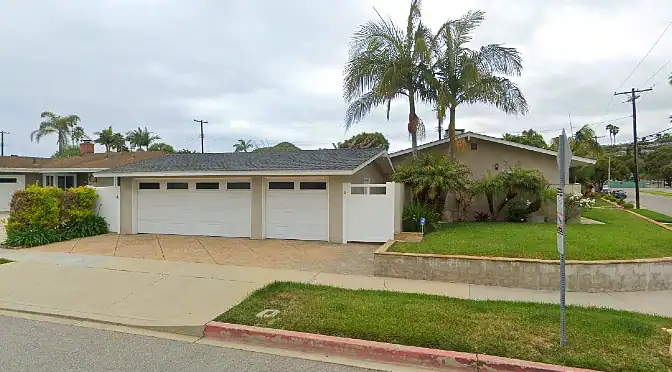
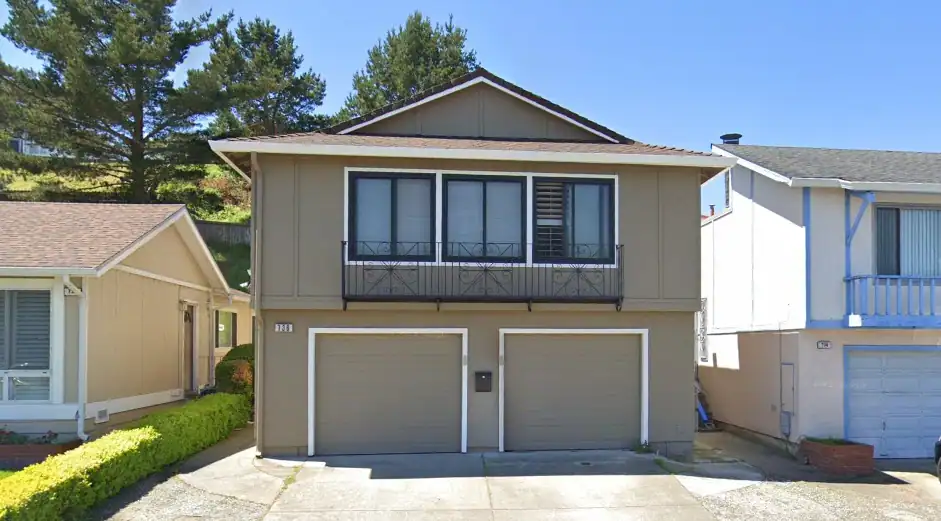
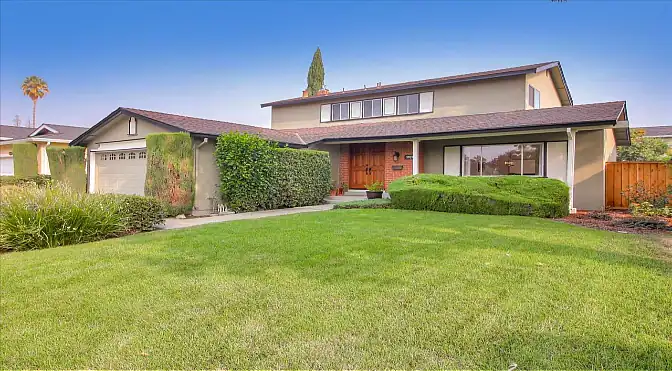
Recent Loans Funded by North Coast Financial


California Hard Money Loan Request
We will contact you to review the loan scenario and provide a quote.