
Hard Money Loan Calculator – Estimate Payments & Costs
California Hard Money Loan Request
We will contact you to review the loan scenario and provide a quote.
Hard Money Loan Calculator
Use this free hard money loan calculator to estimate your monthly payment, total loan costs, and how much cash you will need to close your next real estate investment. Enter your loan amount, interest rate, origination points, and loan term, and the calculator will break down your numbers in seconds.
Unfamiliar hard money terms are defined in our glossary.
Whether you are purchasing a rental property, funding a rehab, or bridging to your next deal, knowing your borrowing costs before you commit to a purchase price is one of the most important steps you can take. This calculator is built for real estate investors who want real numbers fast.
Our hard money loan FAQ answers the questions borrowers ask before applying. North Coast Financial also has a bridge loan calculator for homeowners looking to estimate bridge loan costs and terms.
What Is a Hard Money Loan Calculator?
A hard money loan calculator is an online tool that estimates the costs of a private, asset-based real estate loan. Unlike a standard mortgage calculator, it accounts for the features that are unique to hard money lending: higher interest rates, short loan terms, origination points, and payment structures that differ from traditional amortizing loans.
When you enter the key variables into the calculator, including the loan amount, interest rate, number of points, and loan term, it produces a clear picture of your monthly carrying cost and your total cost of capital. That number tells you whether a deal makes sense before you make an offer.
How to Use This Calculator
The calculator asks for a few straightforward inputs:
Loan Amount. This is the amount you are borrowing. Hard money lenders typically lend 60% to 75% of the property’s current value, depending on the loan type and property. If you are not sure of your loan amount yet, start with an estimate based on 65% to 70% of the purchase price.
Interest Rate. Hard money loan rates typically range from 9% to 12% annually in California, though they vary depending on the lender, property type, borrower experience, and loan-to-value ratio.
Origination Points. Most hard money lenders charge an origination fee expressed in points, where one point equals 1% of the loan amount. This is a one-time fee paid at closing, not a recurring cost. Points generally range from 1.5 to 3 on most hard money loans.
Loan Term. Hard money loans are short-term by design. Terms commonly range from 6 to 24 months. Enter the number of months you expect to hold the loan.
Once you enter these inputs, the calculator will show you your estimated monthly payment and your total cost of the loan over the full term.
Understanding Loan-to-Value (LTV) and After-Repair Value (ARV)
Loan-to-Value (LTV) is the ratio of the loan amount to the value of the property. If a property is worth $500,000 and a lender offers 70% LTV, the maximum loan amount is $350,000. The remaining $150,000 is your equity stake, which protects the lender in the event of a default. Hard money lenders typically lend at lower LTVs than traditional banks because the loans are short-term, the properties are often being purchased below market value or in need of repairs, and the approval process is faster and less dependent on the borrower’s income history.
After-Repair Value (ARV) is the estimated market value of a property after renovations are completed. Some hard money lenders will size a loan based on ARV rather than the current purchase price, particularly for rehab and renovation projects. If a lender offers 70% of ARV and the property’s ARV is $600,000, the maximum loan amount is $420,000, even if you are only paying $350,000 to purchase it today. Understanding which value your lender is using to set the loan amount, the purchase price (current value) or the ARV, makes a significant difference in how much capital you can access.
What Are Origination Points and Why Do They Matter?
An origination fee on a hard money loan is typically expressed as points. One point equals 1% of the loan amount. So if you borrow $350,000 and pay 2 points, your origination fee at closing is $7,000.
Points are paid upfront at closing, not spread across monthly payments. They represent compensation to the lender for underwriting and funding the loan quickly and with less documentation than a traditional lender would require.
When comparing hard money loan offers, it is important to look at both the interest rate and the points together. A loan at 10% interest with 1 point may cost less over a 6-month term than a loan at 9.5% interest with 2 points, depending on the loan amount and how long you hold it.
Other Costs to Factor Into Your Deal
The calculator covers your loan costs, but your total out-of-pocket on a hard money deal includes more than just principal, interest, and origination fees. Before finalizing your numbers on any deal, also account for:
Down payment. You will need to bring cash to cover the portion of the purchase price not funded by the loan. At 65% LTV on a $500,000 purchase, your down payment is $175,000.
Closing costs. Escrow fees, title insurance, notary fees, and recording charges typically add 1% to 2% of the purchase price on top of your origination points.
Rehab or renovation costs. If the property needs work, budget carefully. Cost overruns extend your hold period, which increases your carrying costs and reduces your net profit.
Property taxes and insurance. These accrue from the day you close. Budget for them on a monthly basis alongside your loan payment.
Exit costs. If you plan to sell, factor in real estate commissions and transfer taxes. If you plan to refinance into a long-term loan, factor in those closing costs as well.
Running all of these numbers together, not just the loan payment, gives you a complete picture of what a deal actually costs.
Hard Money Loans vs. Traditional Loans: What the Calculator Does Not Show You
The calculator gives you an accurate cost estimate, but there is an important factor it cannot capture: speed. Hard money loans close in days, not weeks or months. That speed has real value in competitive real estate markets where sellers expect quick closes and the best deals rarely wait around for conventional financing timelines.
Traditional loans require extensive documentation, income verification, debt-to-income analysis, and lengthy underwriting processes. For investment property acquisitions, off-market purchases, properties in need of significant repair, or any situation where you need to move fast, a conventional mortgage is often not a realistic option regardless of the rate.
Hard money loans are also underwritten primarily on the asset, meaning the property itself, rather than the borrower’s personal income. That makes them accessible to investors who are self-employed, between jobs, or who have recently used their borrowing capacity on other properties. The cost of a hard money loan is real, and the calculator will show it to you plainly. The question is whether that cost is justified by the opportunity in front of you.
Common Questions About Hard Money Loan Calculations
What LTV will a hard money lender offer me?
Most hard money lenders lend between 60% and 75% of the property’s current value. The exact ratio depends on the property type, location, condition, and the lender’s guidelines. Owner-occupied residential properties follow different rules. Experienced borrowers and lower-risk properties sometimes qualify for higher LTVs.
Are hard money loan payments always interest-only?
Many hard money loans are structured with monthly payments that cover the interest, with principal due at the end. However, loan structures vary by lender. Some lenders offer partial amortization or other payment arrangements. Always confirm the payment structure with your lender before committing.
How does loan term affect my total cost?
Longer terms mean more total interest paid, even if the monthly payment stays the same. A 12-month loan at 10% costs roughly twice as much in interest as a 6-month loan at the same rate. When running your numbers, calculate total interest, not just monthly payments.
What happens if I need more time than my original term?
Most hard money lenders will extend a loan for an additional term if the borrower is in good standing and the property still meets LTV requirements. Extensions typically come with a fee, often .5 to 1.5 points of the outstanding loan balance. Avoid relying on extensions as part of your plan, but know the option exists.
Can I pay off a hard money loan early?
Most hard money lenders allow early payoff with little or no prepayment penalty. Confirm the prepayment terms before closing. If you are planning to sell or refinance quickly, this matters.
What credit score do I need for a hard money loan?
Hard money lenders are primarily focused on the property, deal and exit strategy for the hard money loan, not your credit score. Many lenders will work with borrowers across a wide range of credit profiles, though some set a minimum floor. The property’s value, your equity position and exit strategy carry more weight than your FICO score.
How North Coast Financial Can Help
North Coast Financial is a direct hard money lender for California with over 45 years of experience. We have funded thousands of loans on residential and commercial investment properties throughout the state.
When you are ready to move past estimates and get a real loan term, we can typically provide a loan approval within 24 hours and fund in as few as 5 to 7 business days for investment purpose loans. We lend on a wide range of property types, including single-family residences, multi-family properties, commercial real estate, and more.
If you have questions about what terms you might qualify for, or want to run your deal numbers with a lender who knows California real estate, call us at (760) 722-2991 or request a free loan quote.
Get a Free Loan Quote: Contact Us
North Coast Financial is a California direct hard money lender licensed by the California Department of Real Estate. All loans are subject to property approval and lender guidelines. This calculator provides estimates only and does not constitute a loan commitment or offer of credit.
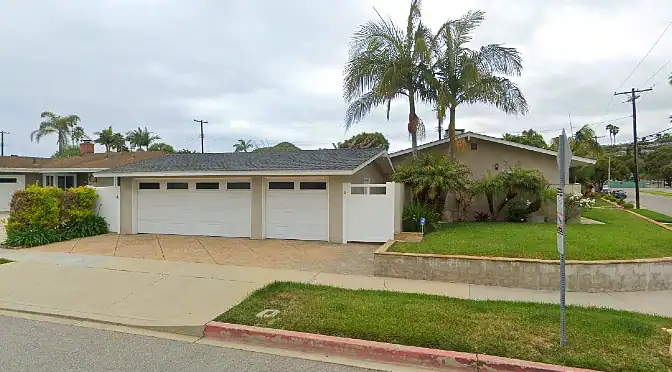
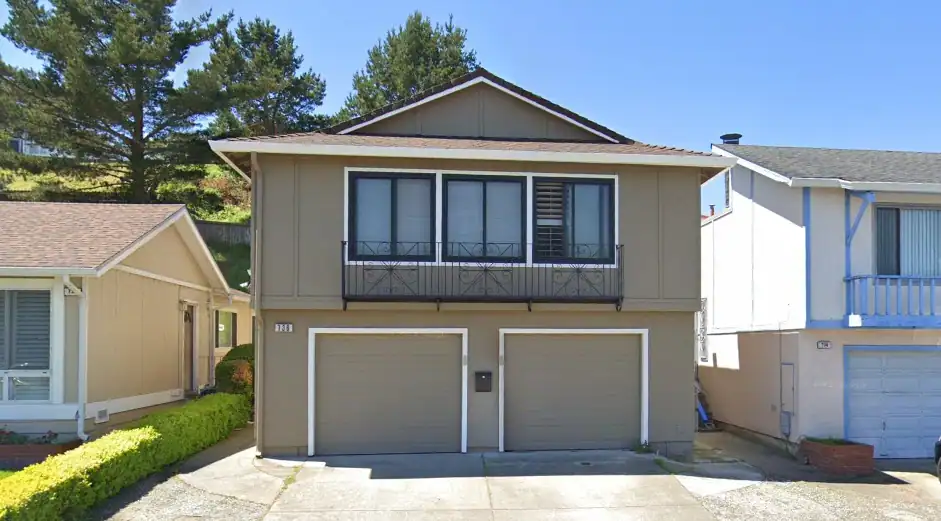
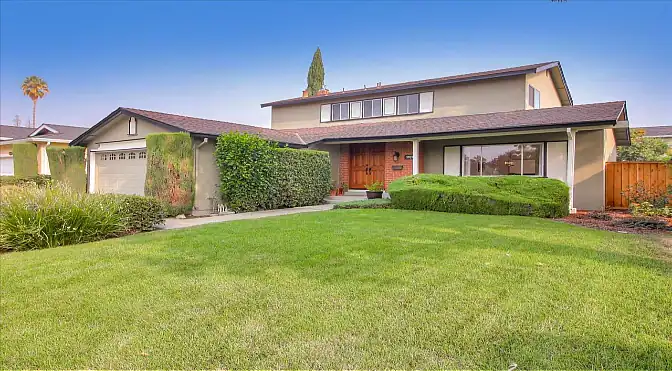
Recent Hard Money Loans Funded by North Coast Financial


California Hard Money Loan Request
We will contact you to review the loan scenario and provide a quote.