
Private Mortgage Lenders in California

California Private Mortgage Loan Request

We will contact you to review the loan scenario and provide a quote.


Google rating 5.0 Based on 72 reviews See all our reviews

California Private Mortgage Lenders

North Coast Financial is a direct private mortgage lender in California. We have been funding private mortgages for 45 years and have funded over $1 billion in California real estate loans. We approve loan requests the same day and fund in 5 to 15 days, on residential and multi-unit property, in first or second position, anywhere in California.

A private mortgage lender is a non-institutional lender that funds real estate loans based primarily on the equity in the property rather than on income documentation and credit scores (for investment purpose). If a bank has declined you, if you need to close faster than a bank can move, or if the property will not pass conventional underwriting in its current condition, a private mortgage is usually the answer.

Call Jeff Hensel at 760-722-2991 or use the loan request form below. You will get a straight answer on your scenario at no cost, including the cases where the answer is that we are not the right lender for it.

Key Takeaways

  1. A private mortgage is an equity loan, not a credit loan. Approval is primarily based on how much equity is in the property and how you plan to pay the loan off (exit strategy). Credit in the low 600s is generally workable when the equity is high and the exit is reasonable.
  2. Expect terms of 1 to 3 years with a higher interest rate than a bank. Private mortgage rates in California generally run 9% to 12% in first position and 12% to 14% in second position, with points charged upfront. You are paying for speed and flexibility, and you should have a plan to refinance or sell before the term ends.
  3. Most private lenders will lend to 65% or 70% of the property value. North Coast Financial lends up to 70%, occasionally 75% on the right scenario, with loan amounts from $30,000 to $3,000,000. Higher loan amounts on a case-by-case basis. The equity in the property (or downpayment) is what determines how much you can borrow.
  4. Speed is the main reason borrowers use private mortgage lenders. A bank takes 30 to 45 days. A private mortgage lender who controls its own capital can approve in a day and fund in 5 to 15 (depending on consumer vs business purpose). That difference is what saves a purchase that is about to fall out of escrow.
  5. Verify the license before you send anyone a file. In California, private mortgage lenders must be licensed with the California Department of Real Estate. North Coast Financial is DRE Broker #01870870, NMLS ID 323044. Ask any lender for those numbers and confirm them.

What is a Private Mortgage Lender?

A private mortgage lender is a non-institutional entity that funds loans for real estate purchases and refinances. Compared to banks and conventional mortgage companies, private mortgage lenders have far fewer requirements, which is what allows them to provide fast, short-term financing on scenarios a bank will not touch.

The practical difference is what the lender underwrites. A bank underwrites: income, tax returns, debt-to-income ratio, credit history. A private mortgage lender primarily underwrites the property: what it is worth, how much equity exists, and how the loan gets repaid. This is why private mortgage lending is also called asset-based lending.

Established private mortgage lenders approve loan requests within a day and fund within 5 to 15 days depending on the loan type and how quickly title and escrow can move. Most private mortgage lenders lend only for business purpose scenarios, meaning investment and rental property or personal residences but the use of the funds is for business purpose. A smaller number, including North Coast Financial, also fund consumer purpose loans secured by a primary residence.

Read More: Owner Occupied Hard Money Lenders

Private Mortgage Lenders vs Hard Money Lenders vs Private Money Lenders

These three terms describe the same loan. The difference is who is saying them.

Hard money loan is the phrase real estate investors use. It came out of the fix and flip and construction world, and it emphasizes that the loan is secured by a hard asset.

Private mortgage is the phrase homeowners, estate attorneys, fiduciaries, and CPAs typically use. It shows up most often when someone needs to borrow against a house they already own or inherited.

Private money loan is the phrase the lending industry uses internally, and it is the broadest of the three. It covers both business purpose and consumer purpose lending.

All three are short-term loans, secured by a deed of trust, underwritten primarily on equity, funded by private capital rather than by a bank or a government-backed program. If a lender quotes you a hard money loan and you asked about a private mortgage, you are not being redirected to a different product.

Two distinctions do matter, and they are not about terminology.

Direct lender versus broker. A direct lender funds from its own capital or a committed investor base and controls the closing date. A broker places your file with outside investors, which can solve unusual scenarios but means the broker does not control the funding or the timeline. Ask which one you are talking to.

Business purpose versus consumer purpose. A loan on an investment property is typically business purpose unless the use of the borrowed funds is for a personal, family or household use. A loan on the home you live in is typically consumer purpose, unless the use of the funds is for a documentable business purpose. Consumer purpose triggers federal ability-to-repay rules, income documentation, and a longer disclosure period. Many private lenders decline consumer purpose loans entirely for that reason.

Related: Private Money Lenders for California Real Estate and Hard Money Loans for Real Estate

How to Find Private Mortgage Lenders

Most borrowers find a private mortgage lender by a referral from a real estate professional (agent, escrow officer, or mortgage broker) or a direct search for lenders licensed in the state where the property is located.

The referral route is the most reliable, because the person referring you has likely already watched that lender perform on a real closing. A lender that looks good on a website and a lender that actually wires funds on the date it promised are not always the same company.

Whichever route you take, confirm four things before you send anyone a loan application or pay any fee.

Confirm the license. In California, private mortgage lenders must be licensed with the California Department of Real Estate. Ask for the DRE number and look it up. North Coast Financial is DRE Broker #01870870, NMLS ID 323044.

Confirm they lend in your county on your property type. A lender that funds apartment buildings in Los Angeles may have no appetite for a single family home in Bakersfield. Ask directly whether they have funded your specific scenario, and where.

Confirm the full cost of the loan upfront. Rate, points, and third-party fees and any other fees the lender may add (processing fees, underwriting fee, document fees, etc.).

Confirm you can reach the person making the loan decision. On a short timeline this matters more than anything else on the list.

Be careful with lender directories and lead aggregation sites. They are not lenders. They sell your contact information to several companies at once, which is why one inquiry produces a dozen phone calls the same afternoon.

North Coast Financial is a direct California private mortgage lender. Call Jeff Hensel at (760) 722-2991 and you will get the rate, the points, and a realistic funding date on the first call. No junk fees.

Are Private Mortgage Lenders Easier to Work with than Traditional Banks?

Generally yes, on flexibility and speed. Private mortgage lenders set their own criteria, so they can approve situations a bank’s underwriting system rejects automatically:

  • a self-employed borrower with two years of complicated returns
  • a property in a condition that will not pass appraisal
  • a trust or estate that has not finished probate
  • a borrower who needs to close in eight days.

The paperwork burden is much lower as well. A private mortgage on an investment property does not typically require tax returns, W-2s, or debt-to-income calculations.

The tradeoff is honest and worth stating plainly. Private mortgage interest rates run higher than bank rates, the terms are short, and you are expected to have a clear exit. That is the price of speed and flexibility, and it is only a good trade when the speed or the flexibility is actually worth something to you.

What are the Advantages of Using a Private Mortgage Lender?

Speed. Approval in a day and funding in 5 to 15 days, versus 30 to 45 days at a bank. This is the reason most borrowers call in the first place.

Equity-based approval (for business purpose). Credit scores and income documentation are secondary. If the equity is there and the exit makes sense, the loan works.

Properties banks decline. Missing flooring, no working kitchen, deferred maintenance, foundation issues, fire damage, an unpermitted addition. A conventional lender cannot fund these. A private mortgage lender can.

Situations banks decline. Trust and probate property, a beneficiary buying out siblings, a 1031 exchange with a deadline running, a partnership dissolving, a borrower who cannot document income conventionally.

A real person makes the decision. At North Coast Financial, Don and Jeff Hensel take the calls and make the credit decisions. There is no loan committee and no automated underwriting engine.

Related: Trust Loans and Estate LoansBridge Loans1031 Exchange Financing

What are the Qualifications for Private Mortgage Financing?

The two most important considerations are the equity in the property, and the exit strategy.

Equity. Most private mortgage lenders lend up to 65% or 70% of the property’s value for a 1st position loan. North Coast Financial lends up to 70%, occasionally 75% on the right scenario. On a purchase, that means a down payment of at least 30%. On a refinance, it means the loan balance has to stay inside that range.

Exit strategy. This is the question most borrowers are not ready for, and it is the one that decides the file. A private mortgage runs 1 to 3 years, so the lender needs to know specifically how it gets paid off: the property sells, you refinance into a conventional loan, an inheritance distributes, a business event closes. “I will figure it out” is not an exit strategy, and a lender that funds without asking is not doing you a favor.

Credit is considered but not the largest factor on a business purpose loan. Low 600s is generally workable when the equity and exit are strong.

Income documentation is not typically required on investment property. It is required on any loan secured by a primary residence, because consumer purpose loans are subject to federal ability-to-repay rules.

How Much Can I Borrow Against My Property?

The highest loan amount possible comes from the property’s value and what is already owed against it, not from your income. Lenders call this loan-to-value, or LTV. It is the loan amount divided by the property value.

A first position example. A California home is worth $900,000 and is owned free and clear. At 70% LTV, the maximum private mortgage is $630,000.

A second position example. The same $900,000 home already has a $300,000 first mortgage at a low rate that the owner does not want to lose. A second position private mortgage keeps the first in place. At 55% combined loan-to-value, total debt can reach $495,000, so the second position loan is up to $195,000. Second position rates run higher than first position, generally 12% to 14%, because the lender is behind the existing mortgage in a foreclosure.

Where property value comes from. An appraisal in some cases, sometimes a broker price opinion, occasionally recent comparable sales on a straightforward property. On a purchase, the value used is the lower of the purchase price and the appraised value.

North Coast Financial funds private mortgages from $30,000 to $3,000,000. If you know the property value and what is owed against it, we can tell you the loan amount on the phone in a few minutes.

Read More: Hard Money Second Mortgages and Trust Deeds

Can I Get a Private Mortgage on the Home I Live In?

Yes, but the list of lenders who will do it is short.

A loan secured by your primary residence is usually considered a consumer purpose loan, which means it falls under federal ability-to-repay requirements and Dodd-Frank rules. The lender must document your income and verify you can afford the payment, and there is a mandatory disclosure period before closing. Most private mortgage lenders avoid owner-occupied lending entirely rather than deal with the additional compliance burden.

North Coast Financial funds owner-occupied private mortgages in California. Expect the process to look different from an investment property loan. We will need income documentation (tax returns, W2s or pay stubs), the time to fund runs longer because of the required disclosure waiting period, and the terms are structured to comply with consumer lending rules.

The scenarios where this comes up most often are a homeowner who is self-employed and cannot qualify conventionally despite having substantial equity, a homeowner who needs to pull cash out quickly for a family or medical situation, and a homeowner facing a foreclosure sale date who needs to reinstate.

If the use of the borrowed funds are for a personal, family or household use it will be considered a consumer purpose loan. It changes the process, the documentation, and the timeline, and it is better to structure the file correctly from the start.

Read More: Owner Occupied Hard Money Lenders in California and Cash Out Refinance Loans

Private Mortgage vs. Conventional Mortgage

Feature Private mortgage Conventional mortgage
Underwriting basis Property equity and exit strategy Income, credit, debt-to-income ratio
Approval time Same day possible 2 to 4 weeks
Funding time 5 to 7 days for investment 30 to 45 days
Term 1 to 3 years, 30 year amortized 15 to 30 years, amortized
Interest rate Higher Lower
Property condition Can be uninhabitable or unfinished Must meet appraisal standards
Credit requirement Considered Central to approval
Income documentation Not required on investment property Always required
Prepayment Usually none Depends on lender

The clearest illustration is property condition. If a house is missing flooring, has no appliances, or has a foundation issue, a conventional lender cannot fund it. The appraisal will reference these issues and the lender will not fund the loan. A private mortgage lender can fund it, then the borrower repairs the property and refinances into a conventional loan once it will pass. This is a common use of a consumer purpose private mortgage in California.

Can I get a Private Mortgage with Bad Credit?

Yes. Private mortgage lenders primarily weigh the property’s equity and the repayment plan ahead of the credit score, which is why a private mortgage is often available when a bank loan is not.

Credit is not ignored, though, and it is worth understanding how it is actually used. A lender looks at credit to understand the story. The lender will need to know whether there is an active bankruptcy, whether there are recent defaults on other real estate, whether there are tax liens or judgments that would need to be paid at closing. These affect the loan scenario. A low score by itself, with real equity behind it and a clear exit can still be approved.

Credit in the low 600s is generally workable at North Coast Financial when the equity and exit strategy are solid.

What matters more than the score is the exit. If credit is the reason a bank declined you, and the plan is to refinance into a conventional loan in 18 months, the lender will want to understand what changes between now and then.

What is the Process of Getting a Loan from a Private Mortgage Lender?

  1. The conversation.You describe the scenario: property address, approximate value, existing loans against it, the amount you need, and how you plan to pay it off. Five minutes on the phone. At North Coast Financial you will have an indication of terms on that first call.
  2. Application and property information.A short application, plus documentation on the property and the purpose of the loan. On a consumer purpose loan there is additional income documentation.
  3. Approval and valuation.Same day approvals are available. The lender orders title and performs a broker price opinion for a valuation.
  4. Documents and disclosures.The lender prepares the initial disclosures, note, the deed of trust, other required disclosures and sends the package to escrow.
  5. Signing and funding.You sign, escrow confirms it is ready to close, and the lender wires funds. Total elapsed time is typically 5 to 7 days from the first call (for business purpose)

The single most common cause of delay is not the lender. It is a title issue nobody knew about such as an old lien or HELOC that was never reconveyed or a vesting problem on an a family transfer of the property.

Are Private Mortgage Lenders Regulated?

Yes. Private mortgage lenders are regulated at the state level, generally by the state’s department of real estate or department of financial protection. In California, private mortgage lenders must be licensed with the California Department of Real Estate, and loan originators must hold an NMLS identification number.

North Coast Financial is DRE Broker #01870870, NMLS ID 323044.

Additional regulation applies depending on the loan. Consumer purpose loans secured by a primary residence fall under federal rules including the Truth in Lending Act, the ability-to-repay requirement, and TRID disclosure timing. Business purpose loans on investment property are exempt from most of those requirements, which is why the process is faster and lighter.

Before you work with any private mortgage lender, ask for the license number and verify it with the DRE. A legitimate lender will give it to you without hesitation.

What are the Risks Associated with Private Mortgage Loans?

Foreclosure risk is the same as any mortgage. The loan is secured by a deed of trust. If it goes into default, the property is eventually sold at a trustee sale. This is not unique to private lending.

Refinance risk is the real one. A private mortgage is short-term. If the plan is to refinance into a conventional loan and the borrower’s credit or income has not improved by the time the term ends, or values have decreased, the exit is less feasible. This is the risk borrowers underestimate most.

Cost. Higher rates and upfront points are a genuine expense. On a loan held for six months to save a purchase, the cost is usually worth it. On a loan held three years because there was never a real exit, it is not.

Junk fees. Some lenders quote an attractive rate and then add processing, document, underwriting, and administration fees at closing. Ask for the full amount of costs upfront. North Coast Financial does not charge any junk fees.

The way to manage all four is to know the exit before you sign, and to have a realistic second option if the first exit does not materialize.

Best Private Mortgage Lenders

There is no single best private mortgage lender, because the four kinds of lender in this market are good at different things.

A direct private money lender funds from its own capital or an internal investor base. It controls the timeline and can commit to a closing date. This is the fastest option when escrow is closing.

A mortgage fund pools investor capital and lends from the pool. Funds are reliable on larger loans but often have a narrower credit box and a fixed loan minimum.

A broker places your file with private investors. A good broker with real investor relationships can solve unusual scenarios a single lender would decline. The tradeoff is that the broker does not control the money, so the approval and timeline is less certain.

A lender directory is not a lender. It sells your contact information to several lenders at once, which is why submitting one inquiry produces a dozen phone calls.

Judge any of them on four things. Will they quote a rate and points on the first call? Have they funded your specific loan type in your county? Do they charge fees before issuing written terms? Can you reach the person who makes the credit decision?

North Coast Financial has funded over $1 billion in California private mortgages across 45 years, holds a 5.0 star review average, and charges no junk fees. Don and Jeff Hensel take the calls themselves.

Read More: North Coast Financial Client Reviews

Private Mortgage Lenders Interest Rates and Terms

Private mortgage rates are higher than bank rates because the loans are short-term, funded quickly, and secured by scenarios conventional lenders decline. In California, private mortgage rates are generally lower than in most other states, because California has a deep field of private lenders and the competition pushes rates down.

North Coast Financial private mortgage terms

North Coast Financial Private Mortgage Terms
Loan amounts$30,000 to $3,000,000
Loan to value (LTV)Up to 70%, occasionally 75%
Lien positionFirst and second
Interest rate and pointsQuoted upfront on the first call
Term1 to 3 years
Property typesSingle family, 2 to 4 unit, multifamily, commercial
GeographyCalifornia only
CreditConsidered, not decisive
ApprovalSame day available
Funding5 to 7 days (business purpose)
Junk feesNone

Rate within the range depends on lien position, loan-to-value, property type, and the strength of the exit. A 50% LTV first position loan on a single family home in San Diego prices differently than a 70% LTV second position loan on a 4-unit building. Call 760-722-2991 with the property address, the value, and what is owed, and you will get a real number rather than a range.

Pros and Cons of Private Mortgage Lenders

Pros. Same day approvals and funding in 5 to 7 days for business purpose. Approval primarily based on equity rather than income and credit. Financing available on properties in poor condition. Financing available on trust, probate, and estate scenarios banks will not handle. First and second position available. Direct access to the decision maker.

Cons. Interest rates run higher than conventional financing. Terms are short, generally 1 to 3 years, so an exit is required. Loan-to-value is capped near 70%, so meaningful equity or down payment is required. Owner-occupied lending takes longer and requires income documentation.

The honest summary: a private mortgage is the right tool when speed, property condition, or an unusual situation is the obstacle. It is the wrong tool when you simply want a lower payment and have time to wait, in which case a conventional lender will serve you better.

California Private Mortgage Loan Request

Call Jeff Hensel at 760-722-2991 or complete the contact form. Tell us the property address, the approximate value, what is currently owed against it, the loan amount you need, and how you plan to pay the loan off. That is enough for us to give you terms.

North Coast Financial has funded over $1 billion in California real estate loans across 45 years. Same day approvals available. Funding in 5 to 15 days. No junk fees. Ever.

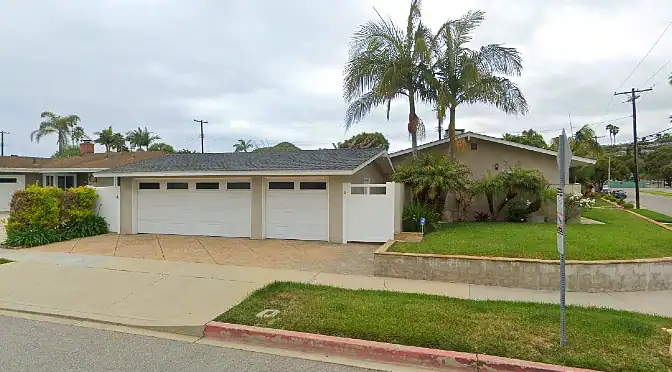
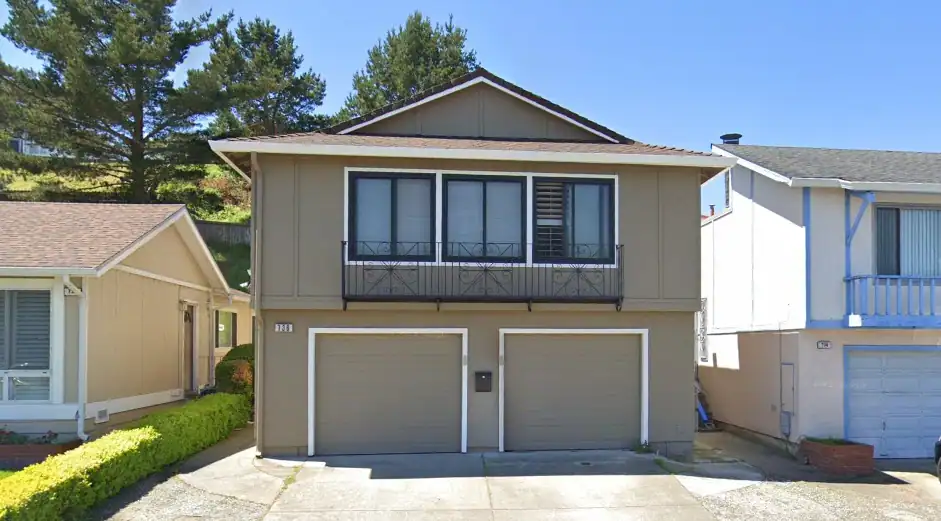
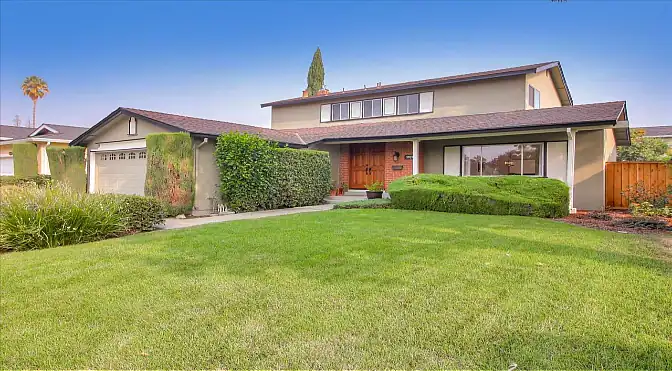
Recent Loans Funded by North Coast Financial

Jeffrey A. Hensel

California Private Mortgage Loan Request

We will contact you to review the loan scenario and provide a quote.


Google rating 5.0 Based on 72 reviews See all our reviews